
After the Ban: What Happens to Britain’s Hunting Hounds?


When trail hunting replaced fox hunting in the UK, it was meant to mark the end of a brutal chapter. The intention was clear: no more chasing and killing wildlife for sport. But behind the scenes, thousands of hounds bred for the hunt still exist and their fate remains largely hidden from public view.
These dogs are not pets in the way most people understand the word. They are bred in packs, raised in kennels, and valued for stamina and obedience rather than companionship. When trail hunting as a sport lost its legal footing, a question quietly followed: what happens to the dogs when the hunts no longer need them?
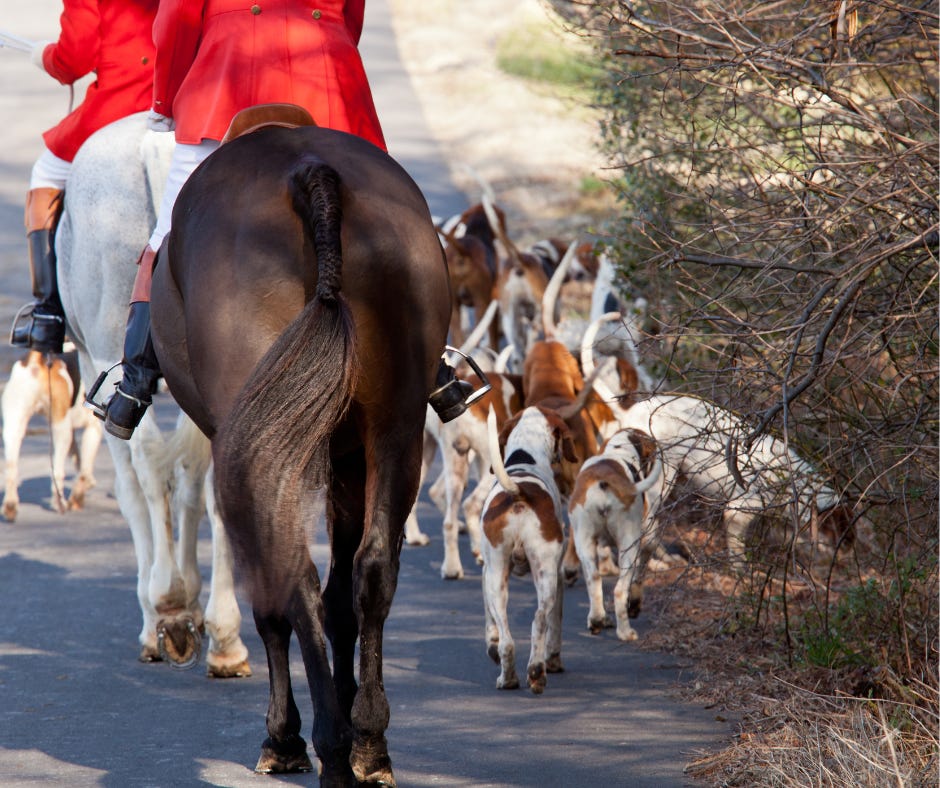
Bred for a Life That No Longer Exists
Foxhounds, beagles, harriers and other scent hounds have been selectively bred for generations to work in large packs, to follow trails relentlessly, and to live in highly controlled kennel environments. They are social, sensitive, and deeply bonded to their pack structure.
But they are also individuals. They feel fear, joy, stress, and attachment just as any dog does.
When a hunt downsizes, merges, or closes, the dogs become surplus. Historically, many were euthanised. Others were quietly passed on, sold, or destroyed with little public record.
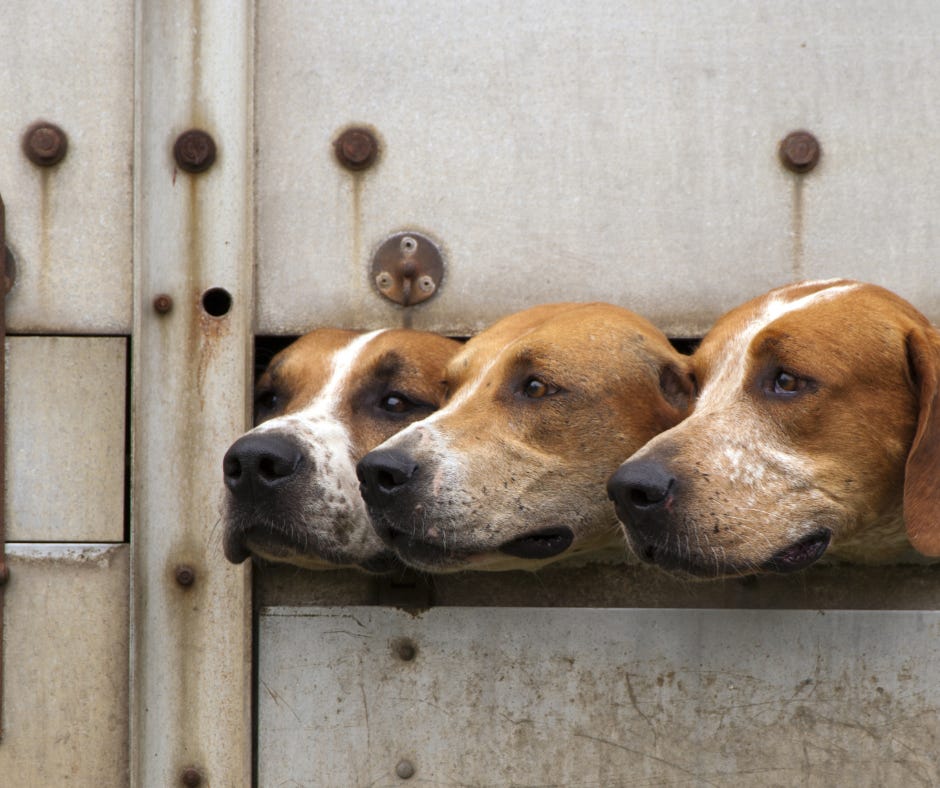
Can Hunting Hounds Live in Homes?
Yes but with care, patience, and understanding.
Once removed from the pack system and given time, many adapt beautifully to domestic life. They learn to walk on leads, sleep on sofas, play with toys, and form deep bonds with humans.
However, the transition is not simple:
Many have never lived indoors.
They may not be house-trained.
They can be overwhelmed by stairs, televisions, traffic, or being alone.
Some struggle initially with being separated from other dogs.
Their prey drive and scent fixation needs careful management.
With experienced adopters, secure environments, and patient rehabilitation, they can thrive. They are often gentle, affectionate, and quietly loyal dogs who have known discipline but not individual love.
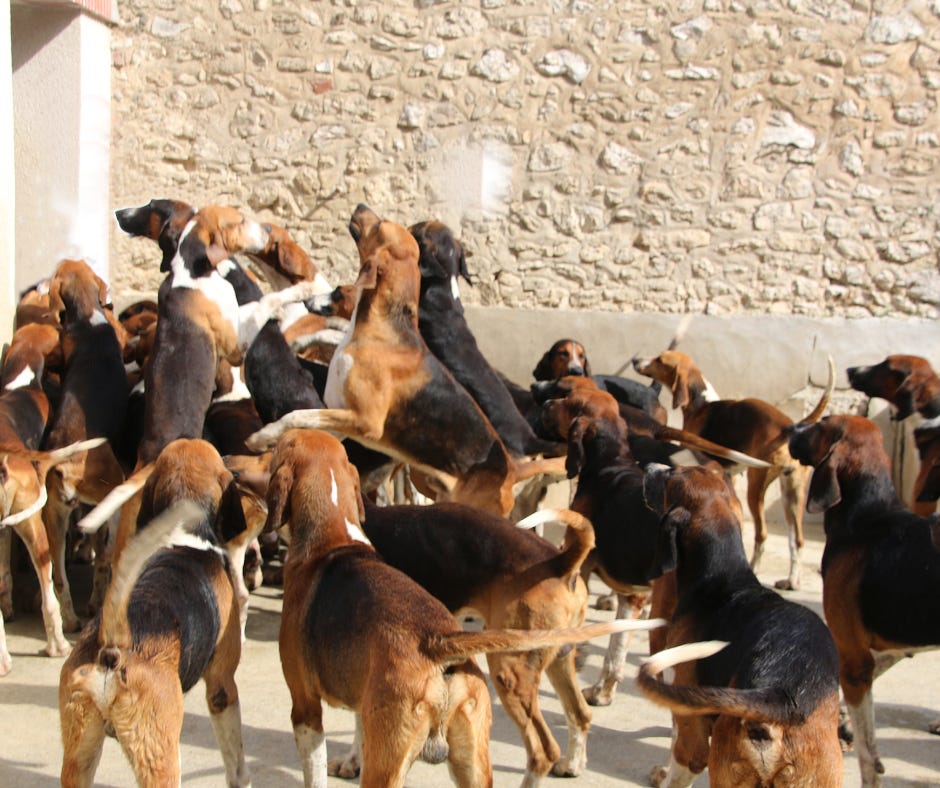
The Ethical Question We Cannot Ignore
If a society decides that hunting wildlife for sport or “trail hunting” is no longer acceptable, it must also take responsibility for the animals created to serve that industry.
It is not enough to ban the act and look away from the tools.
Breeding hounds for a practice that has no ethical future, then discarding them when they are no longer useful, raises serious moral concerns. Dogs are not equipment. They are not disposable once their function ends.
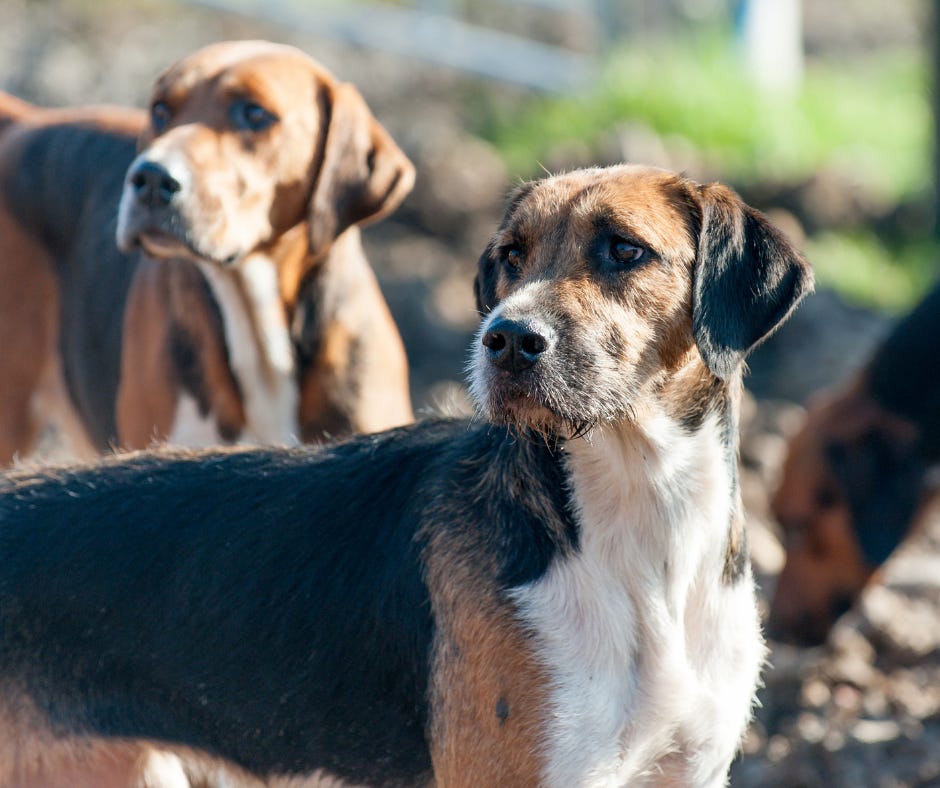
A Call for Transparency and Protection
What is urgently needed is:
A precise national register of hunt hounds
Mandatory rehoming pathways for retired dogs
Independent welfare inspections of hunt kennels
A ban on breeding surplus hounds for sport
Legal responsibility for lifetime care, not just working life
Until then, too many hounds remain invisible living and dying out of sight, their loyalty repaid with uncertainty.
They followed the trail because humans taught them to.
Now it is our responsibility to make sure their trail does not end in neglect, abandonment, or silence but in safety, warmth, and the simple dignity of being loved as individuals, not as instruments of a cruel pastime the country has already left behind.